



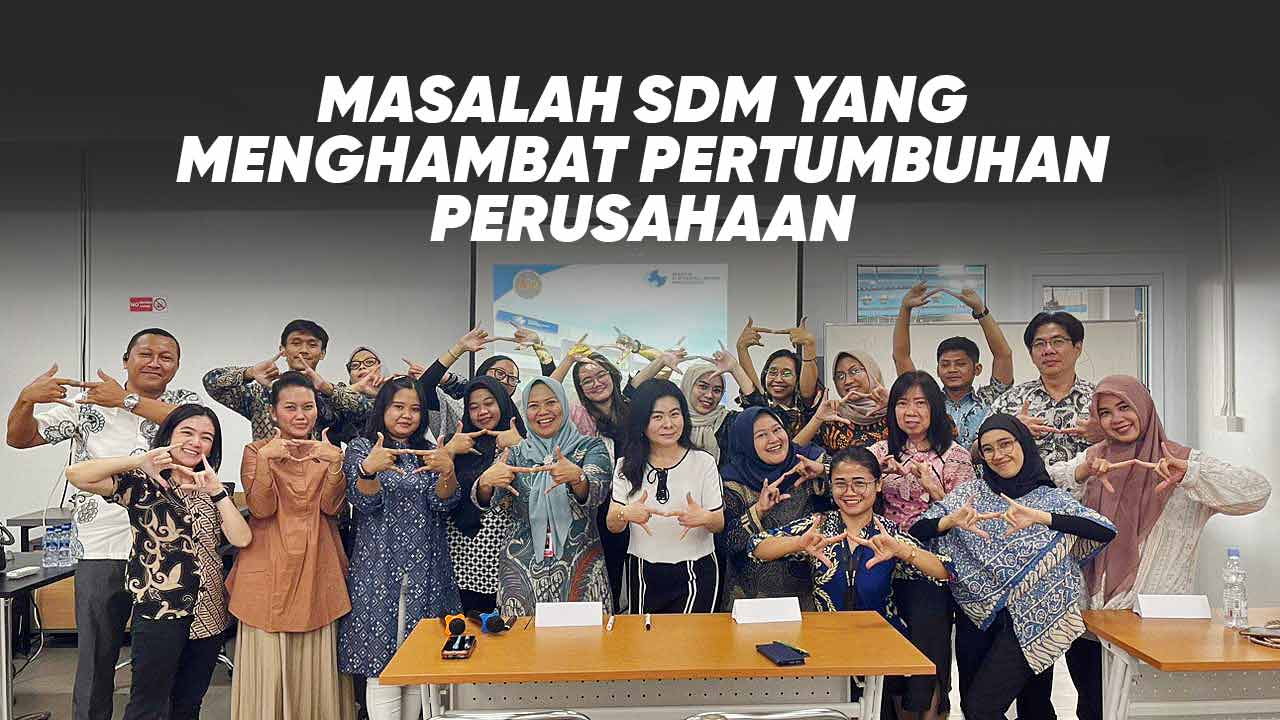
Many companies feel that their business is performing “just okay”—it isn’t declining, but it isn’t really growing either. They meet their targets, but never exceed expectations. If this is the case, it’s highly likely that the problem lies not with the market or the product, but rather with human resources (HR).
Human resources are a company’s main engine. When this engine isn’t running at full capacity, business growth is hindered as well.
Here are The 5 Most Common Human Resources Issues in Companies, and often goes unnoticed.
1. Low Employee Productivity
Productivity isn't just about being busy; it's about results.
Many teams appear to be active every day, but the results they produce are insignificant. The main causes are usually:
- The lack of clear KPIs
- An inefficient work system
- Lack of direction from management
Solution:
Establish a measurable, target-based work system and conduct regular performance evaluations. Productivity must be measurable, not just a matter of perception.
2. Ineffective Leadership
A weak leader will produce a weak team.
Common problems that often occur:
- Inability to make strategic decisions
- Lack of communication with the team
- Unable to build motivation
The result? The team is working without a clear direction.
Solution:
Companies need to develop leadership through structured training and coaching, not just based on experience.

3. Lack of a Sense of Ownership Among Employees
Employees work only to “carry out their duties,” not to “build the company.”.
Signs:
- No initiatives
- It doesn't matter what the final result is
- It's easy to blame circumstances
This is a very crucial mindset issue.
Solution:
Build a work culture that fosters accountability and engagement. This doesn’t happen overnight; it requires a consistent human resources development process.
4. Lack of Human Resource Development
Many companies still view training as an expense rather than an investment.
As a result:
- Employee skills are stagnant
- Not ready to face change
- It's hard to compete in the market
In fact, large companies actually aggressively investing in human resource development.
Solution:
Implement ongoing training programs that are relevant to business needs, not just a formality.
5. No System to Support Performance
Human resources issues are often viewed as individual problems, when in fact the root of the problem lies in the system.
For example:
- The SOP is unclear
- Ineffective organizational structure
- No performance evaluation
Without the right system, even the best employees won’t be able to perform at their best.
Solution:
Build a management system that supports performance, ranging from SOPs and KPIs to data-driven evaluations.
Human Resources Issues Are Not About People, but About the System
Many companies make the mistake of blaming individuals, when what really needs to be improved are the systems and approaches.
Companies that want to grow must start viewing their human resources as strategic asset, not just labor.
It's Time to Transform
If your company is experiencing one or more of the issues listed above, that’s not a sign of failure—it’s a signal that it’s time to transform.
Maximum Life Group serves as a strategic partner in:
- Corporate Training
- Management Consultant
- Leadership Development
- Human Resources Transformation
Using a results-based and systems-oriented approach, we help companies significantly improve their teams’ performance.

FAQ – Corporate Human Resources Issues
1. What are human resources issues in a company?
Human resources issues are challenges related to performance, productivity, work attitude, and employee management systems within a company. These can range from weak leadership and a lack of motivation to the absence of clear work procedures.
2. What are the main causes of low employee productivity?
Some of the most common causes include:
- The lack of clear KPIs
- The system is inefficient
- Lack of guidance from superiors
- Lack of training and development
Low productivity is often not due to employees’ lack of ability, but rather to a system that doesn’t support them.
3. Why does leadership have such a significant impact on team performance?
Leadership determines a team’s direction, culture, and work ethic. Ineffective leaders cause teams to lose focus, motivation, and clarity in their work. Conversely, strong leadership can significantly improve a team’s performance.
4. Is employee training really important for a company?
Yes, it’s very important. Training not only improves skills, but also shapes the mindset, boosts productivity, and helps companies adapt to business changes.
Large companies even view training as a key investment, not an expense.
5. How can you tell if a company has HR issues?
Some of the indicators are:
- Targets are often not met
- The team's performance has plateaued
- High turnover rate
- Lack of initiative on the part of employees
- Many internal conflicts
If any of these things happen, there is likely a problem with the HR system.
6. What is the best solution for addressing human resources issues?
The best solution is a comprehensive approach, including:
- Improvements to work processes (SOPs & KPIs)
- Leadership Development
- Continuing education program
- Data-driven performance evaluation
A piecemeal approach usually does not yield long-term results.
7. When should a company use the services of an HR consultant or training provider?
When:
- The company wants to scale up
- The team's performance is not improving
- Changes to the system or work culture are needed
- Want to improve your leadership skills?
Using a consultant speeds up the transformation process compared to trying to do it on your own without a clear direction.
8. What are the benefits of using training and consulting services like those offered by Maximum Life Group?
The company will receive:
- Programs tailored to business needs
- An approach based on results, not theory
- Measurable improvements in team performance
- Support during implementation, not just training