

By 2026, HR will no longer focus solely on administration and recruitment, but will instead help create a positive work experience for employees. It’s no wonder, then, that employee experience has become a priority for HR in 2026—it has even been widely discussed by various companies.
Why is that? Because it affects employees’ comfort and well-being.
For example, suppose two companies offer nearly the same salary. Company A offers no career advancement opportunities and has few incentives. Company B, on the other hand, provides clear opportunities for learning, supportive leadership, a healthy work culture, and work flexibility.
Most top talent would naturally choose Company B. This is why employee experience is no longer just a trend, but a long-term business strategy.
For companies that want to retain their best employees while boosting productivity, creating a positive employee experience is an investment that cannot be put off.
The role of HR is also becoming increasingly strategic in creating a work environment that enables employees to grow alongside the company.
What Is the Employee Experience?
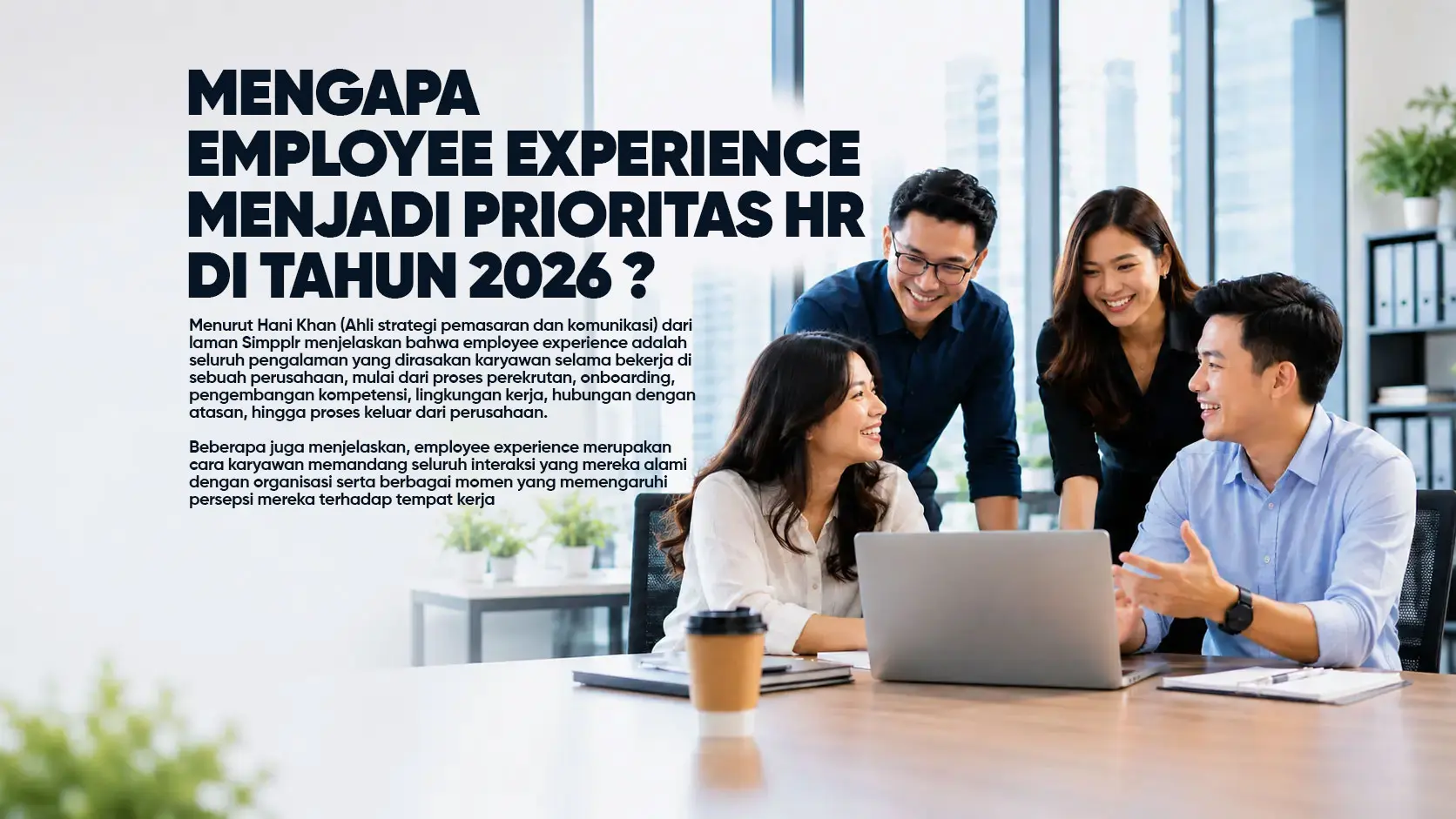
According to Hani Khan (a marketing and communications strategist) from the website Simpplr explains that employee experience refers to the entire experience an employee has while working at a company, from the recruitment process, onboarding, competency development, work environment, and relationships with supervisors, all the way through the process of leaving the company.
Some also explain that employee experience refers to how employees view all the interactions they have with the organization, as well as the various moments that shape their perceptions of the workplace.
This definition emphasizes that the work experience is not only about benefits or compensation, but also about company culture, leadership, technology, and opportunities for growth.
See Also: “Generation Z Now Dominates the Workforce—Are Indonesian Companies Ready?“
Why Will Employee Experience Be a Priority for HR in 2026?
1. Competition for the Best Talent Is Getting Tougher
High-caliber talent now has more options when it comes to where to work. They consider not only salary but also company culture, work flexibility, learning opportunities, and work-life balance.
Report LinkedIn Workplace Learning Report shows that opportunities to learn and grow are among the main reasons people choose to join or stay with a company.
2. Employees’ Desire to Grow and Develop
Modern employees want companies that support continuous skill development. They value organizations that provide coaching, mentoring, leadership development, and training relevant to their career needs.
For example, many global companies, such as Microsoft, continue to invest in a culture of learning (growth mindset) to improve both employee skills and engagement.
3. Employees Are a Key Factor in Business Success
Various studies show that companies with high levels of employee engagement have higher productivity, profitability, and customer satisfaction.
Report Gallup's State of the Global Workplace found that organizations with engaged employees are able to achieve higher business performance than companies with low employee engagement.
4. Changing Expectations Regarding the World of Work
Hybrid work models, flexible schedules, the use of digital technology, and the need for transparent communication have significantly changed employee expectations.
Today, work experience is one of the main factors influencing a person’s decision to stay with a company or seek new opportunities.
5. Supporting Employee Well-Being
A positive employee experience also contributes to employees’ physical and mental well-being. A supportive work environment can reduce stress, foster a sense of belonging, and strengthen collaboration among teams.
According to World Health Organization (WHO), mental health in the workplace is a key factor that supports organizational performance, productivity, and sustainability.
The Role of HR in Improving the Employee Experience
HR plays a crucial role as the primary driver in creating a positive work experience. These responsibilities include developing HR policies, fostering a positive company culture, enhancing leadership competencies, and leveraging technology to streamline employees’ work experience.
According to Society for Human Resource Management (SHRM), employee experience is a strategic responsibility of HR that encompasses the entire employee journey. HR plays a role in aligning organizational culture, leadership, technology, and HR management practices to create a positive work experience and support employee engagement, retention, and performance.
Through this approach, HR not only helps improve job satisfaction but also strengthens employee retention, employer branding, and the organization’s readiness to adapt to business changes.
Challenges in Implementing Employee Experience in Companies
Some of the challenges that companies still frequently face in building the employee experience include:
- A work culture that does not yet support collaboration.
- Leadership that has not been consistent.
- Lack of internal communication.
- The use of HR technology is not yet optimal.
- A non-integrated employee journey.
- Employee development programs are not yet evenly distributed.
- Low engagement rate.
- Resistance to organizational change.
- It is difficult to objectively measure employee experience.
- Limited budget for human resources development.
See Also: “Why Do Many Productive Employees Choose to Quit Quietly?“
How to Build an Effective Employee Experience in 2026
1. Build a Healthy, Non-Toxic Work Culture
A positive work culture is the cornerstone of the employee experience. Companies need to foster a work environment based on mutual trust, open communication, collaboration, and respect for each individual.
According to Great Place to Work, employees who have a positive work experience tend to stay with the company longer, demonstrate higher levels of engagement, and contribute to increased innovation, profitability, and overall organizational performance
2. Enhance the Employee Experience by Leveraging Technology
Digitizing HR through HRIS, learning management systems, employee feedback platforms, and AI can streamline administrative processes while providing a more comfortable work experience.
Technology enables HR to provide more personalized, faster, and more efficient services to all employees.
3. Create an Effective Employee Journey
The employee journey must be designed to encompass the entire process—from recruitment, onboarding, and career development to promotions and offboarding—so that each stage provides a consistent experience.
Global companies such as Adobe have successfully increased engagement through ongoing evaluation of the employee journey and more adaptive feedback systems.
4. Provide Comprehensive Employee Benefits
Well-being isn’t just about salary; it also involves mental health, work flexibility, financial security, work-life balance, and a work environment that supports productivity.
A holistic approach to well-being has been shown to help improve employee satisfaction and retention over the long term.
5. Enhance the Role of Leaders in Shaping Employees’ Work Experiences
Immediate supervisors have a significant impact on the employee experience. Therefore, companies need to develop their leaders’ skills in coaching, communication, decision-making, and building positive relationships with their teams.
6. Provide Training Programs to Support Work Personalization
Training tailored to individual needs helps employees grow in line with their potential and career paths. Programs such as leadership development, coaching, mentoring, competency assessments, and learning pathways provide a more relevant learning experience than general training.
Build an Employee Experience That Makes a Difference for Your Business’s Sustainability with Maximume Life Group!
Many companies already offer competitive salaries and benefits, but still struggle to retain top talent.
If you’re facing the same issue, perhaps what needs to be developed isn’t just the HR system, but the overall employee experience. From work culture and leadership quality to learning opportunities, all of these factors play a role in creating a work experience that makes employees feel valued and motivated to continue growing.
As a company focused on training, leadership development, and management consulting, Maximum Life Group is ready to help your organization design an employee experience strategy that truly makes an impact on your business.
With an experienced team, you can develop more effective leaders, foster a healthier work culture, and build a more productive team. It’s time to create a work environment that not only keeps employees engaged but also enables them to perform at their best.
Click the banner below to start a consultation with the Maximume Life Group team!