

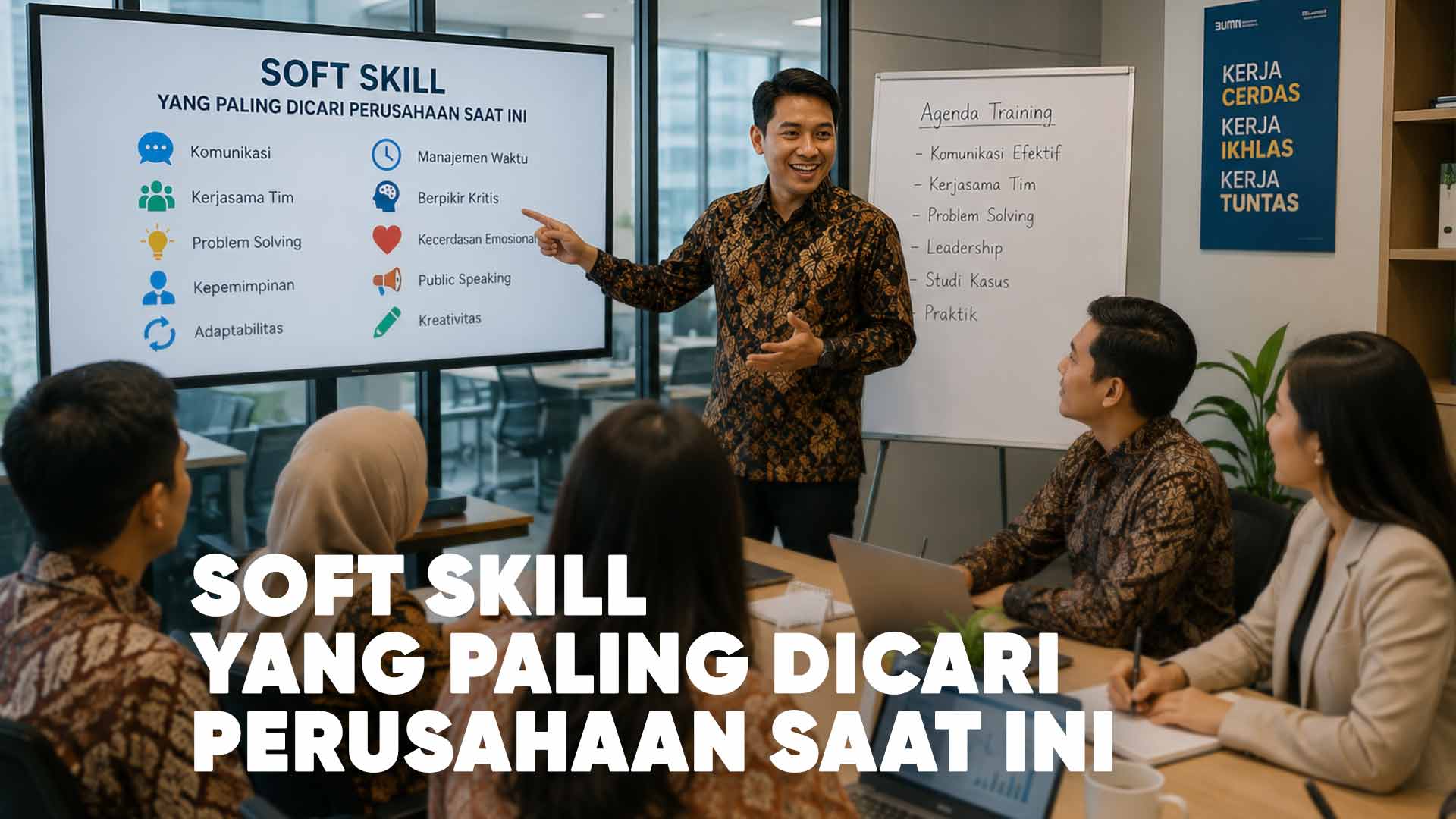
Amid technological advancements and increasingly fierce competition in the job market, technical skills—or “hard skills”—alone are no longer enough. Companies today are becoming more selective in recruiting candidates and developing employees who possess strong interpersonal skills and a solid work ethic.
This is why soft skills are one of the most important factors in the modern professional world.
In fact, many large companies now prioritize soft skills in their recruitment processes, human resources development, and promotions. Employees who can collaborate, communicate effectively, think critically, and adapt quickly are considered better prepared to navigate changes in the workplace.
So, what are the soft skills that companies are looking for most these days?
Article Maximum Life Group This article will provide a comprehensive overview of the various soft skills you need to improve yourself, boost your productivity, and enhance your future career prospects.
What Are Soft Skills?
Soft skills are non-technical abilities related to how a person interacts, works, communicates, and solves problems in the workplace and in daily life.
Unlike hard skills, which can be measured technically, soft skills are more closely related to character, mindset, work ethic, and interpersonal skills.
Examples of hard skills:
- Operating software
- Coding
- Graphic design
- Accounting
Examples of soft skills:
- Communication
- Leadership
- Problem Solving
- Teamwork
- Adaptation
In the modern workplace, a combination of hard skills and soft skills is a key factor in building a successful career.
Why Are Soft Skills So Important in the Workplace?
Companies today are not only looking for smart employees, but also individuals who can work effectively in a team and handle the dynamics of the workplace.
Soft skills are important because they can help:
- Improving Work Productivity
- Building Healthy Professional Relationships
- Reducing Conflict Within Teams
- Improving service quality
- Helping people adapt to change
Employees with strong soft skills typically advance more easily, are trusted to lead teams, and have greater career opportunities.
The Soft Skills Companies Are Looking for Most Right Now
1. Communication Skills
Communication skills are the most basic yet most important soft skills in nearly every field of work.
Employees with good communication skills are able to:
- Communicating ideas clearly
- Active Listening
- Communicate professionally with coworkers and clients
- Reducing Misunderstandings at Work
Effective communication is also essential in customer service, negotiations, presentations, and leadership.
2. Teamwork and Collaboration
The modern workplace demands the ability to work in a team. Almost all jobs involve collaboration across departments and among individuals.
Employees who demonstrate good teamwork typically:
- Easy to work with
- Respecting Other People's Opinions
- Don't be selfish at work
- Focus on a shared goal
The company highly values individuals who are able to create a positive and supportive work environment.
3. Problem-Solving Skills
Every company inevitably faces challenges and problems. For this reason, problem-solving skills are among the most essential soft skills.
Employees with strong problem-solving skills are able to:
- Analyzing the situation
- Critical Thinking
- Finding effective solutions
- Making the Right Decisions
This capability greatly helps companies improve work efficiency and productivity.
4. Leadership Skills
Leadership isn’t just for managers or company executives. All employees actually need to have a spirit of leadership.
Leadership skills include:
- Ability to take responsibility
- Providing motivation
- Leading a team
- Becoming a problem solver
- Making a decision
Employees with strong leadership skills typically advance more quickly in their careers.
5. Adaptability and Flexibility
Changes in technology, work systems, and industry needs are occurring at a rapid pace. Therefore, companies need individuals who are able to adapt to these changes.
Adaptable employees typically:
- Quick to learn new things
- It’s not easy to panic
- Flexible in the face of change
- Able to work in a variety of situations
This skill is particularly important in today’s digital age and in the context of business transformation.
6. Time Management
Good time management helps people work more effectively and productively.
Employees with good time management skills are able to:
- Setting work priorities
- Completing tasks on time
- Reducing Work-Related Stress
- Maintaining the quality of work
The company highly values individuals who are disciplined and able to manage their work effectively.
7. Critical Thinking
Critical thinking is the ability to think logically and objectively when analyzing situations and making decisions.
These soft skills help employees:
- Avoiding Emotional Decisions
- Looking at an issue from various perspectives
- Providing more precise solutions
Critical thinking skills are essential, especially in the challenging and competitive world of business.
8. Emotional Intelligence
Emotional intelligence is the ability to understand and manage one’s own emotions as well as those of others.
Employees with high emotional intelligence typically:
- Staying Calm Under Pressure
- It's easy to build working relationships
- Not easily provoked into conflict
- Highly empathetic
These soft skills are essential for building a healthy work culture.
9. Public Speaking
Public speaking skills are a huge asset in the professional world.
Public speaking helps a person:
- Conveying ideas with confidence
- Delivering a presentation professionally
- Leading a meeting
- Enhancing personal branding
These days, many companies are starting to provide public speaking training to their employees.
10. Creativity and Innovation
Companies prefer individuals who can think creatively and come up with new ideas.
Creativity helps:
- Enhancing corporate innovation
- Solving problems in different ways
- Developing a new strategy
- Adapting to market trends
In today’s competitive business environment, creativity is a vital asset for companies.
How Can You Improve Your Soft Skills?
Soft skills aren’t just innate talents. These skills can be learned and practiced consistently.
Here are some ways to improve your soft skills:
- Attending a training session
- Active in discussions and teamwork
- Learning Effective Communication
- Reading self-help books
- Public Speaking Training
- Being open to feedback
Modern companies have also begun to regularly conduct soft skills training programs to improve the quality of their workforce.
The Role of Soft Skills Training in Employee Development
Soft skills training helps companies build teams that:
- More professional
- More productive
- More solid
- Better prepared to face change
Some training programs that are in high demand among companies:
- Leadership Training
- Communication skills
- Public Speaking
- Team Building
- Problem Solving
- Service Excellence
Investing in soft skills development has been shown to improve a company’s overall performance.
Conclusion
Soft skills are now one of the most important factors in the modern workplace. Companies are not only looking for individuals with strong technical skills, but also employees who can collaborate, communicate effectively, think critically, and adapt quickly.
Skills such as communication, teamwork, leadership, problem-solving, and emotional intelligence are major assets in building a successful career.
Amid an increasingly dynamic changing world of work, soft skills are no longer just a bonus—they are an essential requirement.
Therefore, start improving your soft skills now so that you’ll be better prepared to face future challenges and opportunities.